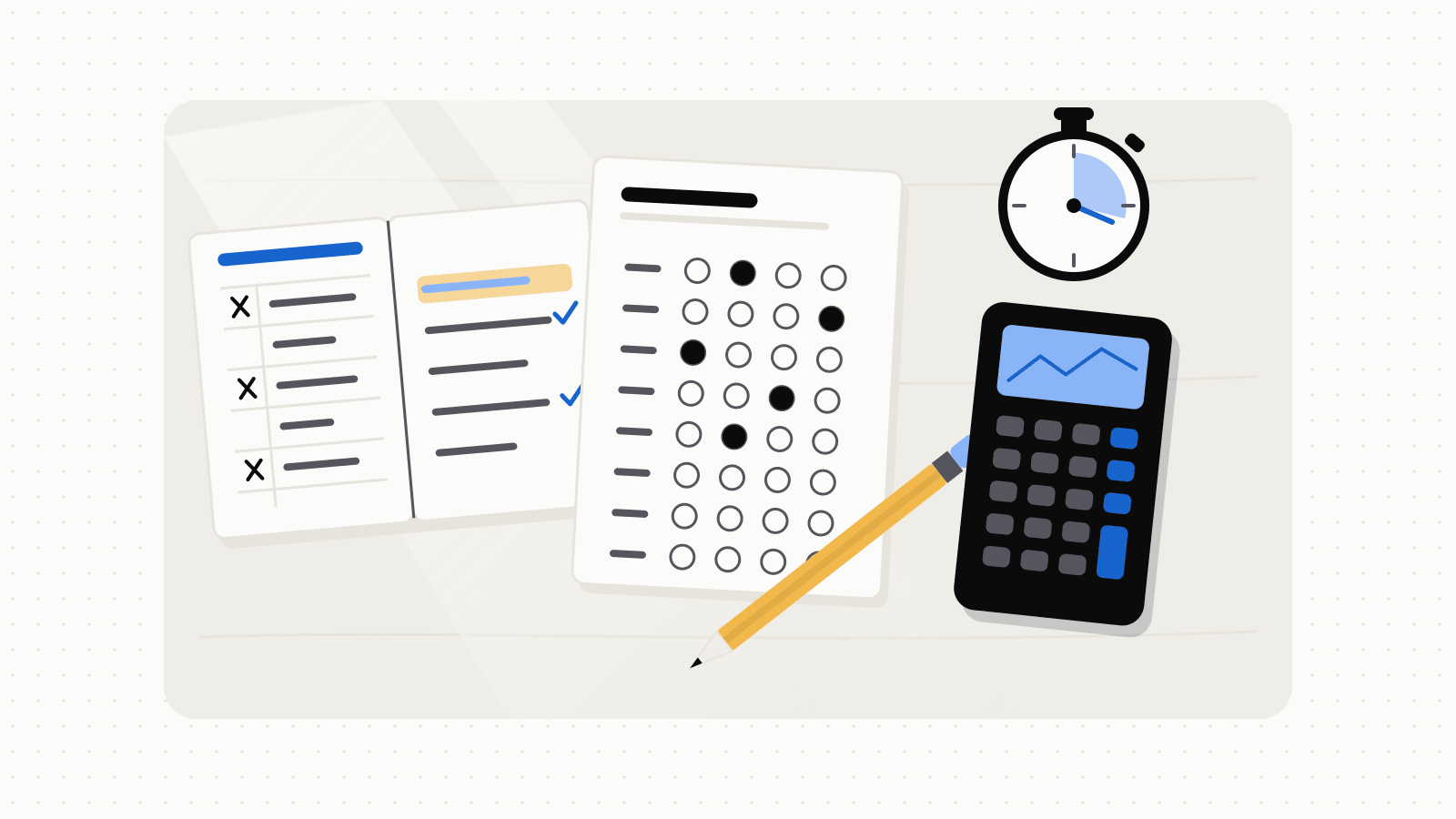
Most students prep for the ACT test the same way. They buy a book, start at page one, take a practice test when they feel guilty, and hope the score climbs. Sometimes it does. Often it stalls, and nobody can say why.
A better approach is a sequence: find out where you stand, decide where you need to be, and spend your hours on the gap. This guide walks you through that plan step by step, from your first diagnostic to the morning of the test, with study methods drawn from learning research.
By the end you'll have a weekly routine you can start today, an error log you can copy, and a schedule you can adapt whether the test is three months away or three weeks away.
How to Prep for the ACT Test: The Plan at a Glance
Good ACT prep follows an order. Random practice feels productive, but it spreads your effort evenly across skills you already have and skills you lack. A sequence puts your effort where it pays.
Here are the six steps:
Take a diagnostic. A full, timed official practice test shows your starting point.
Set a target score. Base it on the colleges you're considering.
Learn the section formats. Know what each section tests and how to study it.
Study your weak areas. Focus on the question types you miss.
Practice under timed conditions. Build pacing alongside accuracy.
Review every error. Then come back to each concept days later.
Steps 4 through 6 repeat in weekly cycles until test day.
Why this order? Three findings from learning science point the same way. Spacing study sessions across time produces better long-term retention than massing them together (Cepeda et al., 2006). Skill grows from deliberate practice, meaning focused work with feedback, while repeating what you already do well adds little (Ericsson et al., 1993). And when you're learning a new kind of problem, studying worked examples reduces the load on working memory, leaving more room to build understanding (Sweller, 1988).
When should you start? Ideally several weeks to a few months ahead, so spacing has room to work. The best gap between sessions depends on how long you need to remember the material (Cepeda et al., 2006). For a test that is months away, a plan that spans several weeks fits better than a few days of intense study (Cepeda et al., 2006).
Step 1: Take a Diagnostic and Set a Target Score
Every good plan starts with data. Here's how to get it and turn it into decisions.
Take a full official practice test under real conditions. Use official ACT materials. Time each section, sit at a desk, put your phone in another room, and take breaks only where the real test allows them.
Record results by section and by question type. The composite score alone hides too much. Note which kinds of questions you missed: comma rules, geometry, inference questions, data tables.
Set a target score. Look up the published score ranges for the colleges you're considering, usually on their admissions pages, and choose a target that puts you comfortably within them.
Calculate the gap for each section. Subtract your diagnostic score from your target, section by section. That gap decides where your time goes. A diagnostic shows which sections and question types are weakest, so study time can go where feedback will have the most effect (Ericsson et al., 1993).
Weight your hours. Bigger gaps get more time.
Example: Maya scores well above her target in English but well below it in Science, where most of her misses come from questions that ask her to read data off graphs and tables. Her plan gives Science the largest share of weekly hours, specifically data interpretation. English gets light maintenance practice so it doesn't slip.
After every later practice test, compare your results against your target again (Ericsson et al., 1993). The plan should shift as the gaps change.
Step 2: Learn the ACT Section Formats
The ACT includes English, Math, Reading and Science, plus an optional Writing section. Each tests a different kind of thinking, so each calls for a different way to study.
Inside each section, organize your study by concept or problem type, not by the random order questions appear in on a practice test. Research on problem-solving finds that domain knowledge organized into schemas, mental frameworks for recognizing and solving a type of problem, is the main thing that separates experts from novices (Sweller, 1988). Grouping similar problems helps you build those frameworks.
Section | What it tests | Common problem types to group | Best study method |
|---|---|---|---|
English | Grammar, punctuation, sentence structure and clear writing | Commas, verb agreement, pronouns, transitions, wordiness | Learn grammar rules by category, then drill each category with practice questions |
Math | Algebra, geometry, functions and problem-solving | Linear equations, word problems, geometry, functions | Study worked examples, then solve similar problems on your own (Sweller, 1988) |
Reading | Understanding and reasoning about passages | Main idea, inference, detail, author's purpose | Practice comprehension strategies on timed passages |
Science | Reading data and evaluating experiments, not memorized facts | Graphs and tables, experiment design, conflicting viewpoints | Study worked examples of data questions, then try similar ones (Sweller, 1988) |
Writing (optional) | Building and supporting an argument in an essay | Thesis, analysis of perspectives, organization | Timed essay practice with feedback on each draft |
For Reading, specific techniques like previewing questions or summarizing each paragraph can make a real difference. If this section is a weak spot, review these reading comprehension strategies before you start timed passages.
Step 3: Study Your Weak Areas With Deliberate Practice
This is where most ACT exam prep either works or wastes time. The key idea is deliberate practice: focused work on what you get wrong, with feedback that tells you why. Repeating tasks you already do well adds little (Ericsson et al., 1993).
That leads to a common mistake. Many students believe that taking more full practice tests will automatically raise their scores. It won't, not on its own. A full test without careful review is mostly repetition. The improvement comes from targeting the question types you miss, not just completing more tests (Ericsson et al., 1993).
Mistakes are the raw material here. If a wrong answer still feels like a verdict on your ability, it helps to learn how to treat mistakes as information. Each miss tells you exactly what to study next.
Use worked examples for hard problems
Another myth says reading worked solutions is a waste and you should only solve problems from scratch. The research says otherwise. Conventional problem-solving takes up a large share of your limited working memory, leaving less capacity to learn the underlying pattern (Sweller, 1988). Studying a worked example first, then trying a similar problem, reduces that load (Sweller, 1988).
This matters most for ACT Math and Science, where students often understand the concepts but struggle to set up multi-step problems (Sweller, 1988). As you get fluent with a problem type, fade the examples out and solve independently.
Space each concept across days
Don't fix a weakness in one marathon session. Come back to the same concept several times across days, because spaced study leads to better long-term retention than massed study (Cepeda et al., 2006).
Worked Example: Fixing a Multi-Step Math Weakness
Jordan's diagnostic shows he misses most linear-equation word problems. He knows how to solve an equation. He struggles to turn the words into one. Here's his plan:
Day 1: He studies two worked solutions. Next to each step, he writes what it does, such as "define the variable" or "translate 'twice as many' into 2x." Then he solves two similar problems with the examples nearby.
Day 4: He solves new problems of the same type with no notes. Any step he can't reconstruct goes back on his study list.
Day 9: He completes a mixed, timed set that includes linear word problems among other types. He logs any errors.
This short plan combines all three principles: worked examples to lower the load (Sweller, 1988), focused practice with feedback (Ericsson et al., 1993), and spacing across days (Cepeda et al., 2006).
Step 4: Practice Under Timed Conditions and Review Every Error
Once you're working on weak areas, build a weekly rhythm that combines spacing and feedback. Here's the cycle:
Take a timed practice section. One section is enough for most weeks. Save full tests for checkpoints.
Review every error with a written reason. Not "I got it wrong," but why.
Revisit the concept several days later with new questions.
Repeat. Each cycle applies spaced retrieval and feedback at the same time (Cepeda et al., 2006; Ericsson et al., 1993).
For more on choosing and working through practice items, see how to practice ACT prep questions well.
Build an error log
Keep a notebook or spreadsheet with these fields for every missed question:
Question type: for example, "comma with nonessential clause" or "inference."
Why you missed it: content gap, misread the question, ran out of time, or careless error.
Correct reasoning: the steps that lead to the right answer, in your own words.
Revisit date: a day several days out when you'll try a similar question.
Feedback that only says right or wrong isn't enough. Deliberate practice depends on feedback that helps you understand and correct the error (Ericsson et al., 1993). The "correct reasoning" field is where that happens.
Train your pacing
Accuracy is only half of the ACT; the other half is finishing. Practice with a watch, not your phone. Learn to spot time sinks, flag them, and come back once the easier questions are done. On Reading and Science, track how long each passage takes so you know if you're falling behind. And if official scoring confirms there's no penalty for wrong answers (check the ACT site), answer every question, even with a guess.
Sample ACT Prep Schedules: Cramming vs. Spaced Study
Many students plan to prep for the ACT in the final week, believing a burst of intense study works as well as steady effort. It doesn't. Spreading study over time leads to better long-term retention than cramming the same material together (Cepeda et al., 2006).
Cramming the final week | Spaced study over 8–12 weeks | |
|---|---|---|
Retention | Lower long-term retention (Cepeda et al., 2006) | Better long-term retention (Cepeda et al., 2006) |
Feedback opportunities | Few chances to review errors and try again | Many short cycles of practice, review and revisiting (Ericsson et al., 1993) |
Stress | Everything piles into a few days | Workload spread evenly, with time to adjust |
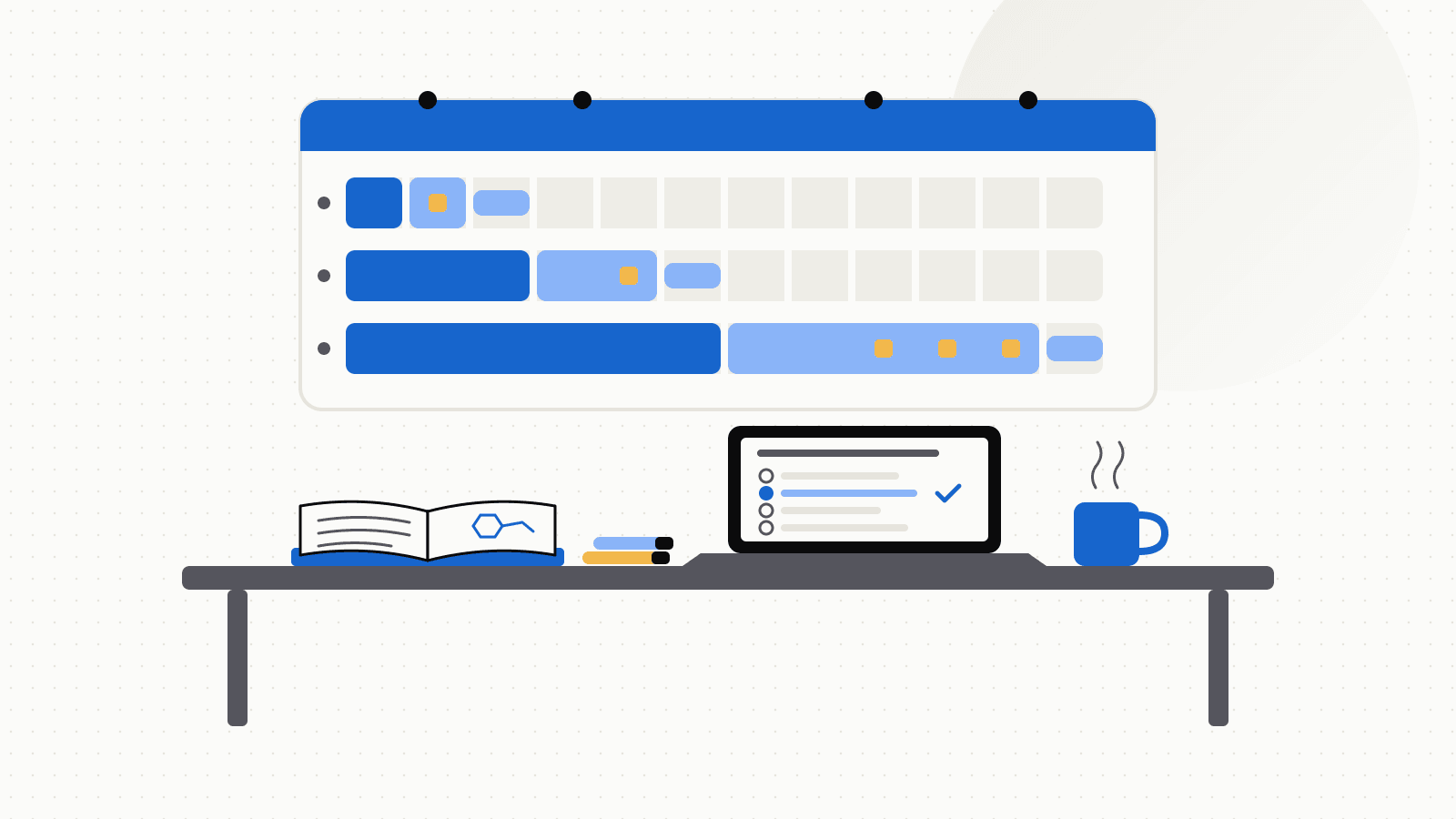
A spaced plan in three phases
Phase 1: Diagnosis and foundations. Take the diagnostic, set your target, learn each section's format and review core rules and concepts in your weakest areas.
Phase 2: Targeted practice. Run the weekly cycle: worked examples, timed sections, error review and spaced revisits.
Phase 3: Full timed tests and refinement. Take full practice tests at intervals, compare each to your target and adjust your hours.
To set your revisit dates, build a spaced review schedule that brings each concept back more than once.
If you're short on time
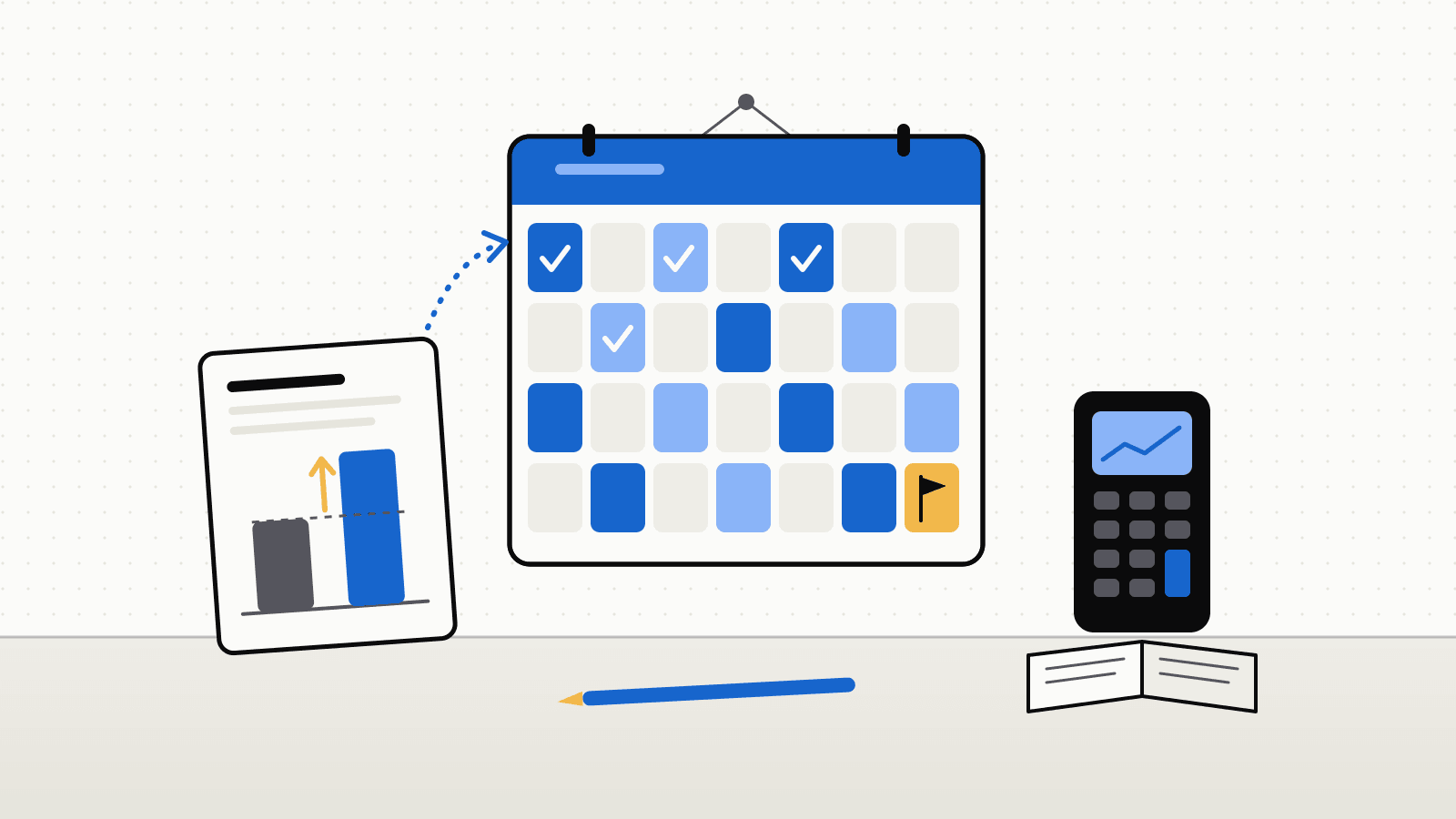
With only a few weeks, prioritize the section with the biggest gap between your score and your target. Even then, space your sessions rather than stacking them all into the final days. Short daily sessions still give you more spacing and more chances for feedback than a weekend marathon.
Your ACT Test-Week Checklist
The last few days are about arriving rested and ready, not cramming in more. Taper your studying: do light review of your error log and stop adding new content. Your spaced practice has already done the heavy lifting (Cepeda et al., 2006).
Protect your sleep in the nights before the test, not just the night before. If you want the reasons, read about why sleep matters for memory.
Confirm logistics early in the week, using official ACT rules: your admission ticket, an acceptable photo ID, an approved calculator, the test center location and the required arrival time. Sorting these out ahead of time means you won't be scrambling on the morning of the test.
Plan your pacing reminders and a reset routine for a passage that goes badly. For example: take one slow breath, mark your best guess, move on, and return if time allows. One hard passage shouldn't cost you the next three.
On test morning, eat a familiar breakfast, arrive early and warm up with a few easy questions you've already solved. The goal is to start the first section feeling alert, not cold.
Frequently asked questions
How far ahead should I start my ACT test prep?
Ideally several weeks to a few months before test day, which gives you room for spaced review. The best gap between study sessions depends on how long you need to remember the material (Cepeda et al., 2006).
Is it better to study a little every day or cram before the ACT?
Study a little and often. Spread-out sessions produce better long-term retention than massed study (Cepeda et al., 2006), and short, regular sessions give you more chances to get feedback and fix errors (Ericsson et al., 1993).
Do I really need to review every wrong answer?
Yes. Review is where feedback turns practice into improvement (Ericsson et al., 1993). Write a reason for each miss, then revisit the concept a few days later with new questions, which adds the benefit of spacing (Cepeda et al., 2006).
Are worked examples only for beginners?
No. They help anyone learning a new or multi-step problem type, because they lower the load on working memory while you build understanding (Sweller, 1988). Fade them out as you become fluent.
Can I prep for the ACT online or on my own?
Yes. Independent or online ACT testing prep works if you follow the same cycle: a diagnostic, targeted practice, timed sections and careful error review. Use official ACT practice materials as your core source.
References
Cepeda, N. J., Pashler, H., Vul, E., Wixted, J. T., & Rohrer, D. (2006). Distributed practice in verbal recall tasks: A review and quantitative synthesis. Psychological Bulletin. doi.org/10.1037/0033-2909.132.3.354
Ericsson, K. A., Krampe, R. T., & Tesch-Römer, C. (1993). The role of deliberate practice in the acquisition of expert performance. Psychological Review. doi.org/10.1037/0033-295x.100.3.363
Sweller, J. (1988). Cognitive Load During Problem Solving: Effects on Learning. Cognitive Science. doi.org/10.1207/s15516709cog1202_4

Discussion